
Supply Chain Continuity: Get Ready to Face Disruptions
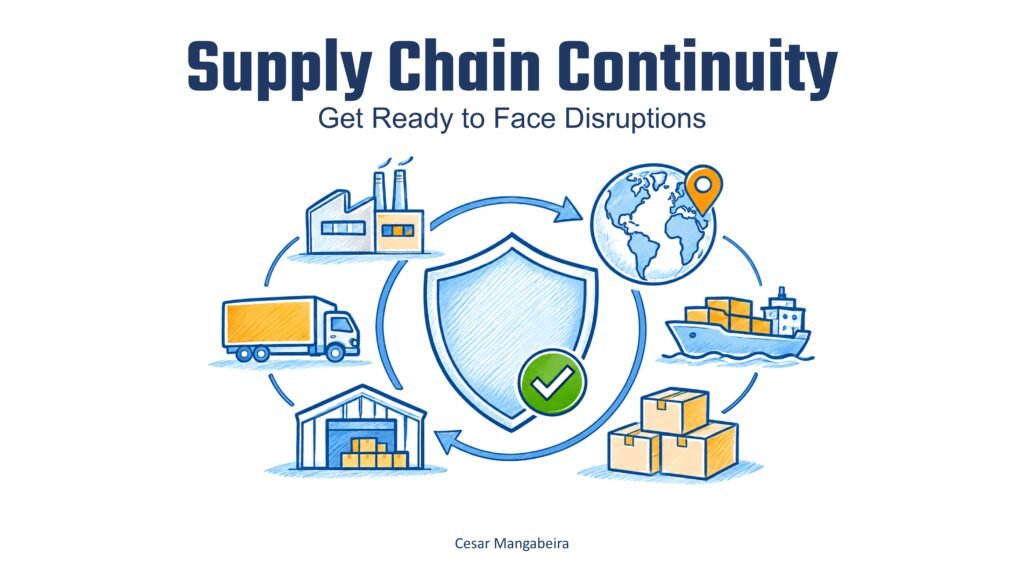

Supply Chain Continuity: Get Ready to Face Disruptions
Supply continuity has become a strategic concern for organizations that depend on complex networks of suppliers, production operations, transportation, and distribution.
Geopolitical conflicts, climate events, cyberattacks, trade restrictions, and supplier failures can trigger supply disruptions, with effects spreading across different stages of the supply chain.
In this context, Supply Chain Continuity represents the ability to prepare for, maintain, and recover the flow of materials, products, information, and services when events threaten business operations.
The central question is how to structure a supply chain capable of responding to disruptions while protecting customer service and business results.
- Factors That Determine Supply Chain Continuity
1.1. Supplier Dependency
Concentrating purchases among a small number of suppliers can create single points of failure. A disruption affecting a particular supplier may compromise the supply of several products and operations.
The analysis must extend across different supply tiers, including suppliers’ suppliers, raw materials, components, and upstream production stages.
1.2. Geographic and Geopolitical Exposure
The location of suppliers, production facilities, distribution centers, and logistics routes influences exposure to risk.
Conflicts, trade restrictions, regulatory changes, and regional events can compromise access to specific materials and markets.
1.3. Climate and Environmental Vulnerability
Extreme weather events can affect facilities, transportation infrastructure, the availability of natural resources, and supply capacity.
The assessment must consider the location of assets and suppliers, exposure to environmental events, and the time required to restore operations.
1.4. Technology Dependency and Cyber Risks
Management systems, integration platforms, communication networks, and digital services play a direct role in supply chain operations.
A technology disruption can compromise orders, scheduling, material movements, invoicing, and communication with suppliers and customers.
1.5. Operational Recovery Capacity
The availability of alternative sources of supply, production capacity, strategic inventories, and alternative logistics routes determines an organization’s ability to respond to disruptions.
The organization needs to understand the time required to restore each operation and the resources needed to recover supply.
1.6. Systemic Crises and High-Impact Events
Major crises can simultaneously affect different regions, suppliers, infrastructure, and operations. Pandemics, wars, economic collapses, natural disasters, energy crises, political instability, and public health emergencies are examples of events capable of causing prolonged supply disruptions and cascading effects.
Preparation must account for extraordinary scenarios, including events whose nature, scale, and duration are still unknown. Planning should provide for response alternatives, emergency resources, and recovery mechanisms to address exceptional situations that may compromise supply chain operations.
- Solutions for Structuring Supply Chain Continuity
2.1. Map the Supply Network
Build a map of supply chain dependencies, identifying direct and indirect suppliers, critical materials, facilities, logistics routes, and concentration points.
The objective is to identify where a disruption could generate effects across other stages of the supply network.
2.2. Develop a Risk and Impact Matrix
Connect identified risks to the processes, materials, and operations they may affect.
The analysis should consider:
- Probability of occurrence.
- Impact on supply.
- Maximum tolerable disruption period.
- Time required for recovery.
- Availability of operational alternatives.
- Financial and commercial consequences.
A Business Impact Analysis (BIA) can help identify priority activities and the maximum tolerable disruption periods for the business.
2.3. Develop Alternative Supply Sources
Establish alternative suppliers for critical materials, assess sources in different regions, and develop substitution options whenever technically feasible.
Diversification must consider capacity, quality, lead times, procurement costs, and the time required for supplier qualification and approval.
2.4. Define Strategic Inventory Levels
Establish safety stock policies for materials whose shortage could halt operations or compromise deliveries.
Inventory policies should consider replenishment lead times, supply variability, material criticality, and supplier recovery time.
The objective is to balance inventory investment against the risk of supply shortages.
2.5. Establish Contingency Plans
Develop specific plans for the main disruption scenarios.
Each plan should define:
- The event that triggers the contingency.
- Decision-making responsibilities.
- Immediate response actions.
- Alternative suppliers and resources.
- Customer service priorities.
- Communication procedures.
- Criteria for returning to normal operations.
2.6. Integrate Technology and Risk Monitoring
Use supplier data, management systems, monitoring platforms, and artificial intelligence tools to identify early warning signals of potential disruptions.
External information analysis can help monitor geopolitical events, weather conditions, logistics restrictions, and changes in suppliers’ financial situations.
Monitoring should enable responsible teams to identify threats and assess the actions required before their impacts reach operations.
2.7. Test Recovery Capacity
Conduct disruption simulations, contingency plan tests, and decision-making exercises.
Scenarios may include supplier unavailability, transportation disruptions, technology failures, and production capacity constraints.
Each exercise should assess response time, resource availability, decision quality, and recovery capacity.
- Indicators for Monitoring Supply Chain Continuity
Supply Chain Continuity management requires indicators that make it possible to assess risk exposure and recovery capacity.
Relevant indicators include:
- Supplier Dependency (%): Share of total purchasing volume represented by the main suppliers.
- Alternative Supplier Coverage (%): Percentage of critical materials with qualified alternative sources.
- Critical Materials Covered by Safety Stock (%): Share of critical materials protected by strategic inventory.
- Recovery Time Objective (RTO): Time required to restore an operation following a disruption.
- Maximum Tolerable Period of Disruption (MTPD): Time limit beyond which the impact on the business becomes unacceptable.
- Supply Recovery Time: Time required to restore supply following an event.
Analyzing these indicators together helps assess vulnerabilities, prioritize investments, and monitor the supply chain’s recovery capacity.
- Integrating Supply Chain Continuity into Planning
Supply continuity must be incorporated into supply chain planning and management decisions.
S&OP (Sales and Operations Planning) can support this integration by incorporating supply constraints, capacity risks, material availability, and potential impacts on demand fulfillment into Supply and Finance decisions.
Risk identification should influence decisions regarding inventory, capacity, supplier sourcing, and alternative supply arrangements.
When a disruption occurs, contingency plans should guide prioritization and recovery decisions, taking commercial commitments and operational constraints into account.
Integrating planning, risk management, and execution allows the organization to assess potential impacts before making customer service commitments.
Conclusion
Supply Chain Continuity represents a strategic dimension of supply chain management.
Establishing this capability requires an understanding of dependencies, risk assessment, the development of alternative supply sources, contingency plans, and recovery testing.
The objective is to prepare the organization to face disruptions, protect the flow of supplies, and restore operations within the limits established by the business.
In an environment of interconnected risks, the ability to anticipate vulnerabilities and make recovery decisions becomes part of strategic Supply Chain management.
Questions
- Is the company prepared to face unexpected disruptions and maintain the flow of materials and products?
- What actions should be prioritized to prepare the Supply Chain to face disruptions and reduce the risk of supply shortages?
🤝 Contact us to learn about the benefits our solutions can bring to your business and request a customized proposal: