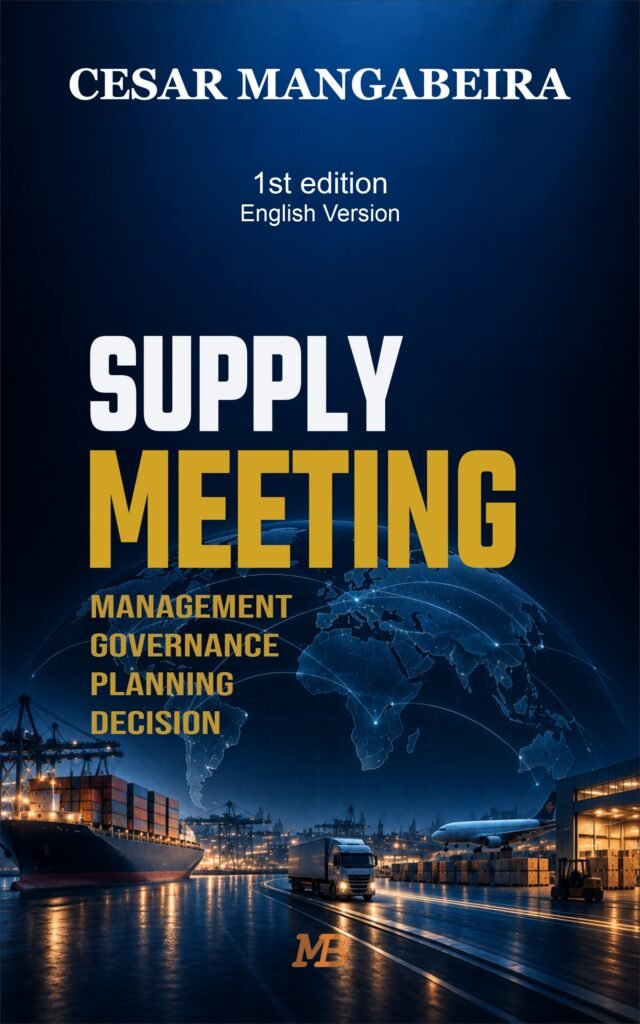
Supply Meeting: Management, Governance, Planning, Decision-Making
Sinopse
A well-structured Supply Meeting can transform the quality of planning, accelerate decision-making, and turn operational constraints into alternatives capable of protecting business results. When you master the management of this forum, you gain a better understanding of where supply can meet demand, which choices need to be made, and how each decision can contribute to company performance.
The result is practical: you will be able to conduct a Supply Meeting with greater analytical capability, organize relevant information, identify gaps, assess constraints, and develop alternatives for situations affecting capacity, production, materials, resources, suppliers, and inventory. This expertise expands your ability to participate in decisions that connect planning, operations, and financial results.
This book presents the Supply Meeting as a management discipline within the S&OP process. Its purpose goes far beyond explaining how to conduct a meeting. You will find a structured approach for organizing governance, planning the meeting, preparing data and information, conducting analyses, structuring decisions, formalizing results, and following up on what has been defined throughout the cycles.
As you progress through the book, you will understand how to transform demand and supply data into a basis for decision-making; how to recognize conditions that may compromise fulfillment; how to address constraints; how to compare alternatives; and how to forward to S&OP integration only those issues that remain unresolved within the scope of Supply. This approach helps you move from a meeting centered on presentations to a forum focused on analysis, decision-making, and results.
You will also learn how to organize meeting outputs, communicate decisions, distribute information, assign responsibilities, preserve traceability, and follow up on actions, decisions, pending issues, and constraints. In this way, each cycle generates references for the next, strengthening the ability to continuously improve meeting management.
The book also addresses indicators that allow you to assess Supply performance, including OTIF, OTD, DOH, Fill Rate, Inventory Turnover, Backorder, Backlog, Stockout, Stockover, Capacity Utilization, Order Cycle Time, and Lead Time. The goal is to help you interpret different dimensions of operations and select measures that contribute to more consistent analyses.
More than simply learning concepts, you will develop an integrated view of the meeting as a management instrument. By applying this knowledge, you can strengthen your ability to anticipate problems, structure alternatives, improve decision-making, and contribute to superior Supply and S&OP results.
If you work in Supply Chain, planning, operations, production, logistics, procurement, finance, or management, this book provides a reference for elevating your professional performance and transforming the Supply Meeting into an environment capable of generating decisions with real impact. Master meeting management, strengthen your decision-making capability, and increase the value you deliver to your organization.
Disponível nas principais livrarias e plataformas digitais.
Sumário
1 Fundamentals of Supply Meeting Management
1.1 What Is Supply Meeting Management
1.2 Purpose of the Supply Meeting
1.3 Role of the Supply Meeting in the S&OP Process
1.4 Scope of the Supply Meeting
1.5 Relationship Between Supply, Demand, and Finance
1.6 Principles of Supply Meeting Management
1.7 Key Takeaways
2 Governance of the Supply Meeting
2.1 Meeting Owner
2.2 Roles and Responsibilities
2.3 Meeting Composition
2.4 Specialists and Guests
2.5 Participation Criteria
2.6 Cross-Functional Collaboration
2.7 Meeting Governance Model
2.8 Key Takeaways
3 Supply Meeting Planning
3.1 Meeting Planning
3.2 Meeting Calendar
3.3 Meeting Frequency
3.4 Meeting Agenda
3.5 Meeting Invitation
3.6 Meeting Preparation
3.7 Extraordinary Meeting Invitation
3.8 Key Takeaways
4 Supply Meeting Data
4.1 Consensus Demand
4.2 Production Plan
4.3 Available Capacity
4.4 Materials and Supplies
4.5 Resources and Constraints
4.6 Inventory Levels
4.7 Key Takeaways
5 Information Management for the Supply Meeting
5.1 Information Gathering
5.2 Information Validation
5.3 Consolidation of Information
5.4 Treatment of Exceptions
5.5 Analysis of Constraints
5.6 Availability of Information
5.7 Meeting Readiness
5.8 Key Takeaways
6 Supply Meeting Execution
6.1 Meeting Opening
6.2 Presentation of Information
6.3 Capacity Analysis
6.4 Materials Analysis
6.5 Inventory Analysis
6.6 Constraint Identification
6.7 Supply Gap Assessment
6.8 Alternative Construction
6.9 Decision-Making
6.10 Formalization of Decisions
6.11 Closing the Meeting
6.12 Key Takeaways
7 Supply Meeting Infrastructure
7.1 Meeting Environment
7.2 Information Systems
7.3 Panels and Dashboards
7.4 Support Documents
7.5 Communication Resources
7.6 Resources for Virtual Meetings
7.7 Key Takeaways
8 Supply Meeting Outputs
8.1 Meeting Decisions
8.2 Supply Plan
8.3 Identified Constraints
8.4 Capacity Gaps
8.5 Approved Alternatives
8.6 Action Plan
8.7 Meeting Record
8.8 Information for the S&OP Alignment Meeting
8.9 Key Takeaways
9 Management of Supply Meeting Outputs
9.1 Communication of Decisions
9.2 Distribution of Outputs
9.3 Responsibility for Outputs
9.4 Information Traceability
9.5 Supply Action Plan Follow-up
9.6 Treatment of Pending Constraints
9.7 Escalation to the S&OP Alignment Meeting
9.8 Key Takeaways
10 Indicators of the Supply Meeting
10.1 Role of Indicators in the Supply Meeting
10.2 OTIF — On Time In Full
10.3 OTD — On Time Delivery
10.4 DOH — Days On Hand
10.5 Fill Rate
10.6 Stock Turnover
10.7 Backorder, Backlog, Stockout, and Stockover
10.8 Capacity Utilization
10.9 Order Cycle Time and Lead Time
10.10 Comparison and Selection of Indicators
10.11 Key Takeaways
11 Supply Meeting Follow-up
11.1 Action Monitoring
11.2 Decision Follow-up
11.3 Pending Items Management
11.4 Review of Constraints
11.5 Preparation for the Next Cycle
11.6 Cycle Closure
11.7 Key Takeaways
12 Supply Meeting Management Improvement
12.1 Meeting Assessment
12.2 Lessons Learned
12.3 Standardization of Practices
12.4 Improvement of Supply Meeting Management
12.5 Meeting Performance Indicators
12.6 Supply Meeting Management Maturity
12.7 Key Takeaways
Disponível nas principais livrarias e plataformas digitais.