
Demand Management
Sinopse
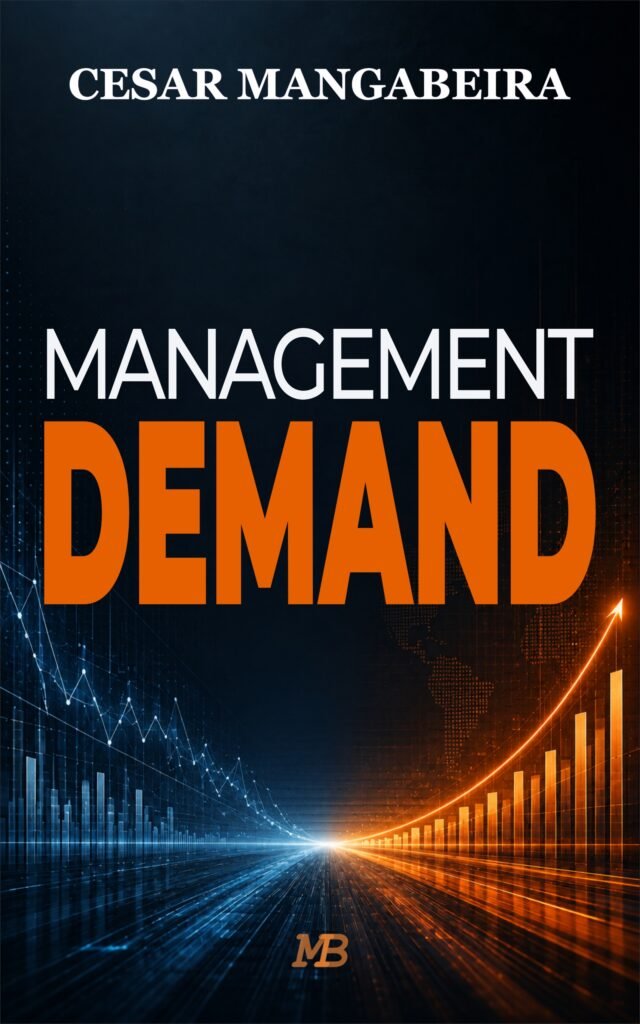
How much does it cost to make demand decisions with fragmented information, unreliable forecasts, and plans that arrive too late? When you master Demand Management, you gain a concrete opportunity to improve decisions, reduce waste, enhance planning performance, and increase your professional value.
Demand Management presents an integrated view of the discipline, connecting fundamentals, demand structure, data, forecasting, planning, collaboration, intelligence, processes, execution, indicators, and trends. You will understand how these components contribute to better decision-making and how this capability can contribute to superior results.
Throughout the book, you will discover how to interpret the nature and behavior of demand, organize its sources, structure data, build forecasts, and transform information into plans. Scenarios, assumptions, planning horizons, and cross-functional collaboration show how different elements contribute to informed decisions.
The book advances toward a modern view of the discipline, exploring Demand Sensing, Demand Shaping, Demand Analytics, Demand Intelligence, real-time planning, event-driven planning, and Decision Intelligence. You will understand how signals and analytics can expand the ability to perceive changes and guide demand-related decisions.
Artificial Intelligence represents an important dimension of this evolution. Machine Learning, Deep Learning, Generative AI, predictive models, intelligent agents, and forecasting automation are presented within the context of Demand Management, helping you understand opportunities and implications for professionals. The book shows how to translate concepts into practice, covering processes, information and decision flows, execution cycles, Demand Review meetings, roles, and integration with Supply, Finance, S&OP, and S&OE.
Performance measurement completes this view. Forecast Error, MAD, MAPE, WMAPE, Forecast Accuracy, Forecast Bias, Tracking Signal, and Forecast Value Added provide a foundation for analyzing errors, accuracy, trends, and the contribution of interventions. You will be able to identify improvement opportunities and use indicators to support decisions about forecasting performance.
The final chapter presents the future paths of the discipline, bringing together data-driven planning, autonomous planning, cognitive supply chains, real-time planning, collaborative platforms, and integration between people and Artificial Intelligence. The final architecture connects these capabilities and shows how data, planning, collaboration, and intelligence can form an integrated view.
If your goal is to improve your professional performance, raise decision quality, expand your analytical capabilities, and contribute to better organizational results, this book provides the knowledge to move forward. You will be able to transform data into decisions, forecasts into plans, and planning into results for productivity, performance, and growth. By mastering fundamentals, processes, indicators, and emerging capabilities, you will be better prepared to interpret changes, evaluate alternatives, and participate in decisions that can generate greater value for the business.
Disponível nas principais livrarias e plataformas digitais.
Sumário
1 Fundamentals of Demand Management
1.1 What Is Demand Management
1.2 Historical Evolution of Demand Management
1.3 Objectives of Demand Management
1.4 Scope of Demand Management
1.5 The Role of Demand Management in Organizations
1.6 Demand Management Architecture
1.7 Relationship with Supply
1.8 Relationship with S&OP
1.9 Relationship with S&OE
2 Demand Structure
2.1 Nature of demand
2.2 Types of demand
2.3 Sources of demand
2.4 Demand variability
2.5 Behavioral patterns
2.6 Demand hierarchies
2.7 Demand segmentation
2.8 Planning horizon
2.9 2.9 Demand Structure Architecture
3 Demand Data
3.1 Internal data
3.2 External data
3.3 Data quality
3.4 Data integration
3.5 Big Data
3.6 Data Lake
3.7 Demand Signal Repository
3.8 Demand Data Architecture
4 Demand Forecasting
4.1 Role of Forecasting
4.2 Statistical Forecasting
4.3 Quantitative Methods
4.4 Qualitative Methods
4.5 Model Selection
4.6 Forecast Monitoring
4.7 Limitations of Forecasting
4.8 Technological Evolution
4.9 Demand Forecasting Architecture
5 Demand Planning
5.1 Demand Planning
5.2 Planning Process
5.3 Inputs
5.4 Consolidation
5.5 Assumptions
5.6 Scenarios
5.7 Planning horizons
5.8 Outputs
5.9 Demand Planning Architecture
6 Demand Collaboration
6.1 Collaborative planning
6.2 Participation of areas
6.3 Sharing assumptions
6.4 Building the collaborative forecast
6.5 Consensus forecast
6.6 Conflict resolution
6.7 Decision management
6.8 Consensus consolidation
6.9 Demand Collaboration Architecture
7 Intelligent Demand Management
7.1 Evolution of Intelligent Demand Management
7.2 Demand Sensing
7.3 Demand Shaping
7.4 Demand Analytics
7.5 Demand Intelligence
7.6 Demand Signal Repository (DSR)
7.7 Demand Signal Management
7.8 Real Time Planning
7.9 Event-driven planning
7.10 Decision Intelligence
7.11 Intelligent planning platforms
7.12 Digital planning ecosystems
7.13 Intelligent Demand Management Architecture
8 Artificial Intelligence in Demand Management
8.1 Evolution of AI applied to planning
8.2 Machine Learning
8.3 Deep Learning
8.4 Generative AI
8.5 Predictive models
8.6 Intelligent agents
8.7 Forecast automation
8.8 Agentes inteligentes
8.9 Automatización de las previsiones
8.10 Model explainability
8.11 Limitations and risks
8.12 Future perspectives of AI
8.13 Artificial Intelligence Architecture in Demand Management
9 Demand Management Process
9.1 Overview of the Demand Management process
9.2 Demand Management macroprocess
9.3 Demand Management Inputs
9.4 Transformations of the Demand Management Process
9.5 Demand Management Outputs
9.6 Information Flow in Demand Management
9.7 Decision Flow in Demand Management
9.8 Feedback in the Demand Management Process
9.9 Architecture of the Demand Management Process
10 Demand Management Execution
10.1 Monthly Demand Management Cycle
10.2 Demand Management Calendar
10.3 Demand Review
10.4 Roles and Responsibilities in Demand Management
10.5 Integration with supply planning
10.6 Financial integration of Demand Management
10.7 Integration with S&OP
10.8 Integration with S&OE
10.9 Architecture of Demand Management Execution
11 Demand Management Indicators
11.1 Indicators as Management Tools
11.2 FE — Forecast Error
11.3 MAD — Mean Absolute Deviation
11.4 MAPE — Mean Absolute Percentage Error
11.5 FA — Forecast Accuracy
11.6 FB — Forecast Bias
11.7 TS — Tracking Signal
11.8 FVA — Forecast Value Added
11.9 Integrated View of the Indicators
11.10 Demand Management Indicators Architecture
12 Future of Demand Management
12.1 Data-Oriented Planning in Demand Management
12.2 Autonomous Demand Planning
12.3 Real-Time Demand Planning
12.4 Collaborative Platforms for Demand Management
12.5 Integration Between People and Artificial Intelligence in Demand Management
12.6 Future Perspectives on Demand Management
12.7 Architecture of the Future of Demand Management
Disponível nas principais livrarias e plataformas digitais.